What client trust costs to build, and what it buys.
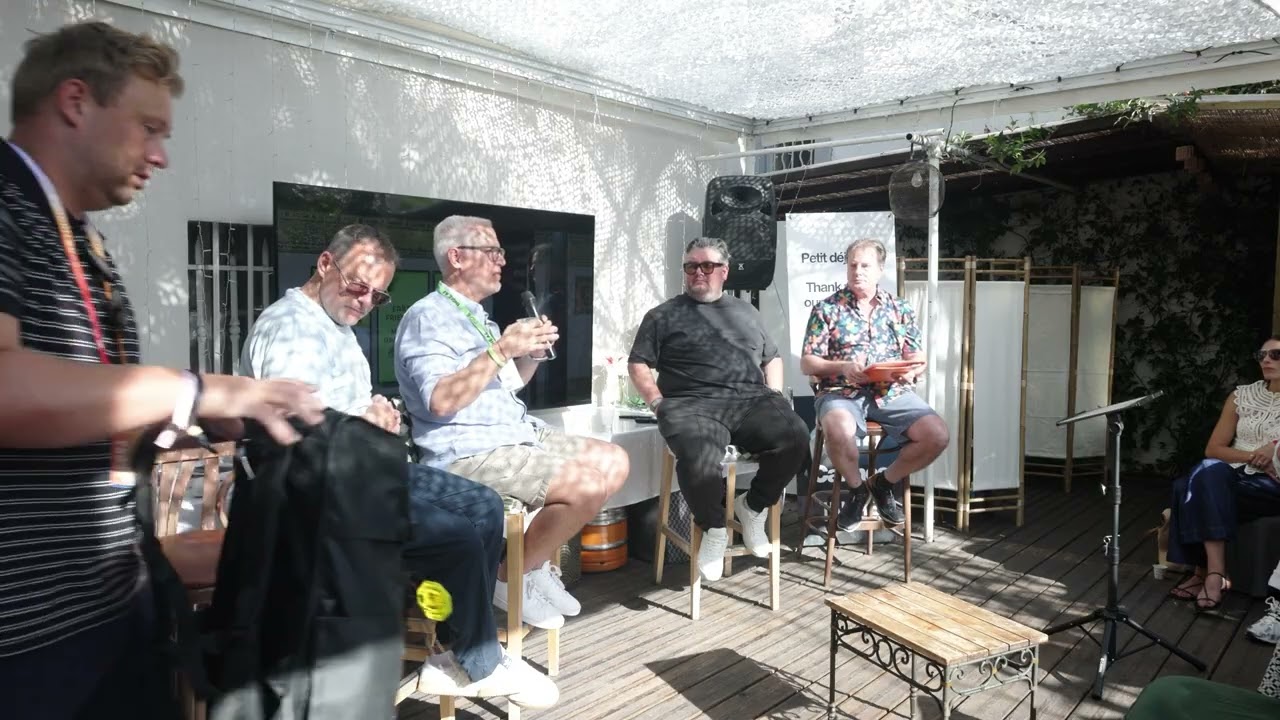 Watch the session
The setup
Every agency says its best work came out of a great relationship. Almost none of them can tell you what the relationship was made of, what it cost to build, or which specific decisions it made possible that would otherwise have died in a review.
That vagueness is expensive. It means principals cannot replicate the conditions that produced their best case study, cannot explain to a prospect why the chemistry matters, and cannot tell early whether a new client is going to buy brave work or grind it down.
This session put two of those relationships on stage and took them apart. One is a food brand that went from 18 stores to more than 18,000 and sold for over $100 million. The other is a 20-year-old browser trying to hold its ground against consolidated big tech. Both sides of both relationships were in the room, which is rare, and which is what makes the hour usable.
The finding that runs through both: the agency is rarely the variable. The client is.
Who was on stage, and why they're worth listening to
Part One — What trust is made of, and what it buys
Purpose-led work has a failure mode that everyone recognises and nobody prices: it goes preachy, the audience disengages, and the brand ends up sounding like it is scolding the person holding the shopping basket. O'Brien opened by asking where that line sat on Strong Roots.
Bill Oberlander named the risk without hedging.
"If you talk about sustainability, plant-based, it does get preachy really quickly, and I think our audience doesn't have a lot of patience for that."
His example was a line of his own that he liked and lost. He pitched a route built around foodie credentials; Dennigan's read was that it took itself too seriously, and it died. The line that survived and shipped was the one that sounded like the audience rather than the mission.
"I think my favorite line was, 'Perfect for the dinner with the Bushwick situationship.' So you're really talking to the audience on their terms and how they live their life, and then the plant-based food, dare I say the veggies, fit into that."
The tagline followed the same logic. "Good Made Easy" carried the ingredient decks, the partner choices and the internal policies without narrating any of them. Dennigan explained why the compression mattered.
"There's a lot of overworthy sentiment when it comes to brands with a mission that are purpose-led. Talking about good in a very, very expansive way, making it easy for people to understand what we're about, I think was the depth of that line. We really labored over that because it's very easy to sound holier than thou. Very difficult to make something simplistic work that widely."
Oberlander added a detail worth stealing: the three words were unencumbered. Nobody had incorporated or trademarked them. A tagline that clears legal on the first pass is a tagline that survives to launch.
The relationship started with a filter, not a pitch. Dennigan did not run a review. He searched for agencies certified as B Corps, found OBERLAND, and called.
"It was actually B Corp that brought us together. A quick search online for agencies that had a conscience or understood mission-led businesses. So the fact that we had the same mindset before we picked up the phone meant a lot."
That is a new-business lesson hiding inside a case study. The certification did the qualifying before either party spent an hour. And the thing Dennigan was screening for after that was not creative reel quality.
"One of the things that I always look for as a CEO is someone who can, and a team who can, fit into the existing structure of the business."
What the trust bought was tolerance for tedium. The packaging shoot ran at the start of COVID, with Dennigan in Ireland, OBERLAND in New York and the photographer in San Francisco, everything approved over video.
"You're moving a carrot stick a quarter of an inch and a sprig of spinach an eighth of an inch, and I'm on Zoom with you. How does that look? Across an ocean, across a continent. I just felt like that was a really good start to our relationship because it was so tedious and so trying, terrifying, literally with a virus taking over the world, and we just got through it."
Dennigan's version of the same period is about what it takes to be handled.
"When you're a founder and also a former designer, and you're OCD and you're a micromanager, you need a very particular type of patience."
He was clear that the fear in the project never attached to the work.
"At the end of the day, we're just selling vegetables. It's very difficult to get over-concerned about the delivery of content."
And the trust bought one specific creative argument. Dennigan wanted food photographed without a vessel, against every convention and every consumer test in the category.
"I have this obsession with not needing food in a vessel in photography. If you look at every single food photography that there's ever been on a packaging, and all of the testing that can be done with consumers, for some reason it always ends up in the same bowl or the same plate and the same familiarity, and it looks like shit and everything looks the same."
Oberlander had a photographer he trusted and a working method that suited remote approval, so the bird's-eye, vesselless style got made. The commercial reasoning behind pushing that hard on pack design was Oberlander's, and it reframes what a packaging budget is:
"Sam was very aggressive getting into big box, whether it was Target or Whole Foods. These places were basically advertising venues. The frozen section is so hideous it makes your eyes bleed when you walk past. So to make the package design be an ad itself in the frozen food section was part of the strategy."
The packaging was the out-of-home buy. That is why the vessel argument was worth having.
There is a limit on all of this, and Oberlander stated it rather than pretending disruption is free.
"If you stand out too much, if you're so disruptive and so radical, you're not going to fit into their culture, right? So you kind of have to strike that balance."
Dennigan's explanation for why the balance was easy to strike is the most portable idea in this half of the session: both companies were the same kind of company.
"It was very easy for us to get on in a client-founder relationship because we were a challenger brand and Oberland were a challenger brand."
Part Two — The first audience is internal
The Mozilla work faced a different problem. Firefox is roughly 20 years old, built by an open-source community with strong opinions about who owns the brand, and positioned against tech giants it also has to coexist with commercially.
Amy Bebbington's first correction was to the premise of the question. She was asked how the team navigated cynicism toward tech brands.
"Firefox is 20 years old, and actually there's not that much cynicism with Firefox because people really love the brand. So you start off in a place where you're like, well, there's a lot of love for this already. There's a lot of tech companies that struggle a bit with fighting against negativity, but we didn't seem to have that."
The constraint she named instead was categorical drift.
"We have a lot of association with Google, and I think we have to be quite careful sometimes to make sure that we don't come across as a search engine."
Lee Rolston's contribution was about behavior rather than positioning. Tech brands, in his account, share a set of unwritten rules about how to look and act, and a 20-year-old company that helped build the internet has standing to break them.
"In tech, there are certain perceived rules of how you should behave, how you should show up, how you should work. And sometimes you've got to break those rules. It's weird to think of tech businesses as legacy businesses. They've been around for almost a generation."
Then came the part of the session that most agencies underweight. Bebbington explained that the previous Mozilla identity had itself been open-sourced, developed at Mozweek, the company's all-hands offsite week.
"There was a room, and people went into the room, and everyone doodled and drew and came up with different ways in which they felt the Mozilla identity should be represented."
Knowing that history set the operating rule for the new one.
"We've got to be very careful when we do this that we don't go into a corner and develop an identity that is going to feel like it's been done in a complete silo, away from the rest of the organization, because there's only one thing that will happen in that situation: people will resist it internally. We knew that if we didn't get internal buy-in, we would not succeed and get this brand out."
The flag mark was designed to satisfy that constraint on both sides. It reads as an activist symbol, appropriate for the Mozilla Foundation's fighting posture, and it contains the M that has always lived in the logo. The old identity's ASCII-language cue was carried across as well.
"Building on the DNA that already existed, making people feel like actually what had been done before, I think that's a really nice way of making sure that you take from the original and just extend it for next."
Rolston generalised the principle and named where JKR gets it from.
"You've got to remember that the first line of audience is yourselves, and you've got to get internal belief. It's not an abstract concept. You're not branding a brand as some sort of weird thing. You're branding a business that people work in and go in day in, day out."
Internal buy-in is often argued for defensively, as a way to prevent sabotage. Bebbington's framing is the opposite: the distinctiveness was the point, and internal belief was what allowed it to survive.
"It really does stand out. It feels incredibly different from the rest of the tech landscape, which I think we're really proud of, collectively, because it has such distinction, and that was absolutely intentional. It was meant to be distinct. It was not meant to blend in with anything else. We wanted it to stand out and be confident."
Her evidence that it worked is a better adoption metric than any tracking study.
"At the most recent all-hands, someone had the new Mozilla logo tattooed on them, which we thought was like, okay, that's great. We got the internal buy-in that we wanted."
One more thing about how the JKR relationship functions, and it inverts the usual story about who pushes. Rolston noted that the pressure to go further came from the client side.
"It's not always that you assume the creative teams are the ones who are always pushing. Sometimes the clients are like, you can go further, push it, be a bit more brave."
The uncomfortable truth
Asked what leaders should do to protect a core ethos rather than defaulting to the safest corporate compromise, Rolston gave an answer that undercuts the way most agencies talk about themselves.
"You've got to realize in marketing broadly, most of what we do doesn't work. So you've got to really drive for the excellent, because it's only the excellent stuff that stands out, and you've really got to push yourself to get brilliant."
Then he named the variable.
"Every bit of good work has always, always got a client who believes and is with you in it."
Earlier in the session he had put the same claim more bluntly: he could not name a single piece of work JKR had delivered that was any good without a client behind it, and the only route to good work in the world is a great client.
Sit with what that means for an agency. Your reel is not primarily a record of your talent. It is a record of who bought. Which makes client selection, not craft, the highest-leverage decision a principal makes, and makes losing a good client a creative event rather than a financial one.
Bill Oberlander then said the thing that keeps that from being an easy discipline for an independent. He credited the framing to Chuck McBride, his co-founder on the Indies @ Cannes program.
"As a small, entrepreneurial shop, you've got all the skin in the game. If the meeting goes bad, you could go under. It's really personal. If you have three bad meetings in a row, suddenly your business is now under threat."
His phrase for the condition was the session's sharpest four words: as an indie, you are "energized and terrorized" by the same presentation, in the same hour.
That is the bind. The people who most need to select clients on values and courage are the people who can least afford to lose three meetings in a row. Nobody on stage pretended otherwise.
The unclaimed idea in the session came from the client. Samuel Dennigan pointed out that the entire industry invests in making agencies better at their jobs and invests almost nothing in making clients better at theirs.
"There's a huge value in the client understanding how to be a good client. I have a lot of friends working in advertising and media space, and I've more recently met people who are helping bigger companies become better clients in order to get better work."
He was candid about the gap from the inside.
"We don't know how to brief. We don't understand how the organizations work. It's a completely different industry."
And he named the structural mismatch that makes mutual understanding hard. A founder-led business where one client can hold the balance sheet of the whole company operates on nothing like the logic of a CPG business in hyper-growth. Neither side is trained to model the other's arithmetic.
"There's a stage that can benefit everyone, which is explaining how both sides of the fence work, and ultimately being a good client is beneficial to everybody and the work."
If Rolston is right that the client is the variable, Dennigan described the only lever agencies have on that variable, and almost nobody is pulling it.
Oberlander's addition sets the bar for what a good client delivers.
"When the client comes into the room, they have to know what they want. They need the absolute clarity before they can actually turn on the room and get you excited and follow that vision. And when you're dealing with the founder, there's no wiggle room there. It's from his brain. You put the brand on the planet."
What you can use
Every session from Indies @ Cannes 2026 — plus every other Blueprint, the tools, and the surveys — opens up with one sign-in.