Word of mouth in an era of counterfeit attention.
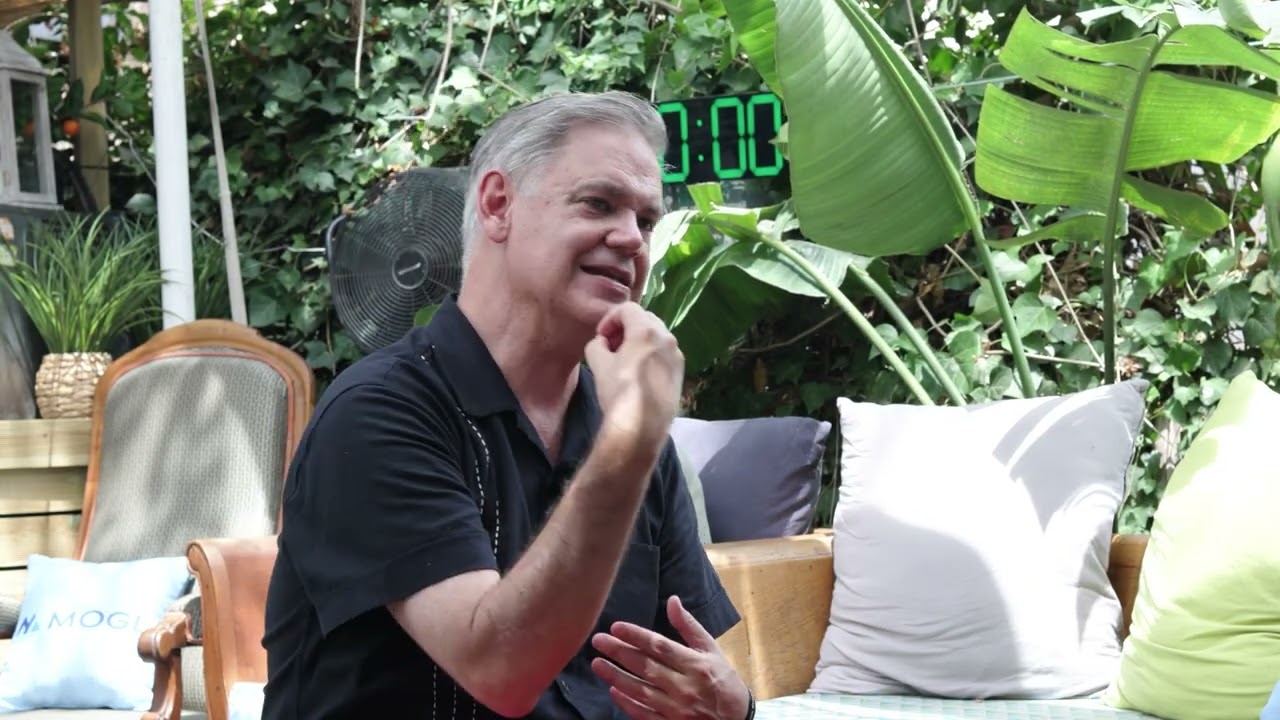 Watch the session
The setup
Every agency in Cannes this year sold a client a number. Impressions, followers, engagement rate, reach. Almost none of those numbers can be independently verified by the person paying for them, and a fair share of the humans behind them may not exist.
That is the problem this session walks into. Katie Walley-Wiegert opened it by putting a related humiliation on the table: a survey of several hundred global CMOs, asked to rank the capabilities that matter most in a modern agency, put PR dead last.
Ted Wright's answer to both is the same answer he has been giving since 2001, which is that the industry has been optimizing the one part of the system that can be gamed and ignoring the one part that cannot. His argument is not that word of mouth is nice to have alongside media. It is that word of mouth is the only measurement surface left where a bot farm cannot stand in for a person, and that most brands are spending against an audience they have never met to tell a story nobody would repeat.
At 24 minutes, this is the shortest substantive session of the week and the most immediately operational. There is a scoring rubric in it, a trade-show tactic you could run next month, and a number that should make every agency reporting deck feel slightly worse.
Who was on stage, and why they're worth listening to
Part One — The triangle, and why the brief is 22 seconds long
Wright's framework is old enough to be unfashionable and simple enough to run on a whiteboard. He starts by separating the behavior from the practice.
"Word of mouth is people talking to each other. Word-of-mouth marketing is the organization of how that communication flows."
That distinction is the whole discipline. One is a phenomenon you cannot control. The other is a set of decisions about where to stand and what to hand people.
The shape those decisions take is a triangle.
"On one side of that triangle is story. Another side is target. The bottom is goal, and the middle is activity. It's that activity that brings the story to the target."
Story has a qualifying test, and it is an acronym you can hold in your head, which is the point.
"A story is most likely to get shared between two people who know each other if it has three qualities: if it's authentic, if it's interesting, and if it's relevant. If you like acronyms in English, does it have AIR?"
Then comes the constraint that reframes everything downstream. Wright claimed on stage that the average word-of-mouth conversation globally runs about 22 seconds, and that people in mature media markets make between 3,200 and 3,600 decisions a day while being able to hold only three to six ideas in their head at once.
22 seconds is not a stat. It is a brief. It is the actual length of the thing your campaign is trying to produce, and almost nothing an agency ships is built to survive being compressed into it.
Wright demonstrated the compression problem using Kyle O'Brien's jacket.
"Nobody wakes up in the morning thinking, gosh, I'd really like to know more about a seersucker tuxedo, except maybe the CEO of that company. And then his spouse probably cares about half as much. Their kids care another half, and you go out to the general public, half, half, half, half, and kind of nobody cares."
The halving is the argument. Interest decays by an order of magnitude with every step away from the person who makes the product, and most brand storytelling is written from the center of that decay curve by people who cannot see it.
Katie Walley-Wiegert put the practical test on the table. Brands claim to solve that blindness by listening, and she wanted to know what the listening has produced.
"All the brands say we're listening to our customers, but it's become really passive. Okay, but what was the last piece of feedback you received, and what did you do off that?"
A brand that cannot answer has never left the center of the curve. It has a research line item and no idea what anybody outside the building would repeat.
Part Two — The 10%, and putting yourself physically in their way
Kyle O'Brien asked the operational question: what does it take to get someone to say did you hear, did you see?
Wright's answer splits any addressable market in two. He claimed roughly 10% of people, which he narrowed to 9.2 to 11.1%, have what he calls an advocate personality, defined by three traits.
"They like to try new things because they're new. They're intrinsically motivated. And they love to share stories with their friends."
The gap he claims between those people and everyone else is not incremental.
"An average advocate's story will get shared within that person's social graph 40,000 times in a single year. The other 90% of us, we just call them civilians. Their stories get shared around six times in that same year."
Attribute that number to Wright rather than to physics. But the strategic consequence holds even if the multiplier is softer: targeting in word of mouth is not demographic, it is behavioral, and the qualifying question is not who they are but whether they gather.
"The two best qualities of a target for word of mouth are that they have pre-existing communication networks, and they gather together physically, virtually, or both."
Which is where the session turns tactical, and where independents with no media budget should pay attention. Wright's most underused channel is not a platform.
"Trade shows are kind of the undiscovered, particularly on the B2B side."
And his trade-show playbook is specific enough to steal whole. Rounded tables, never square, on the strength of an academic study he attributes to Penn State claiming an 8% lift in conversations. Nobody standing behind the table, because a table is a barrier. And then the part worth writing down.
"We go find the six longest coffee lines, and we have these people stand there in a pair and talk to each other about it. Then people will have conversations with you. They order the coffee, they walk away, they throw it away, they go to the next one."
You are not staffing a booth. You are seeding conversations in the places where people are already stuck standing next to each other with nothing to do. The booth is where people go to avoid you.
The same test takes apart the largest line on a lot of brand budgets. Wright put category sponsorship — the stadium name, the official-provider badge — in front of the rubric and could not find a story anywhere in it.
"The idea that there's a bunch of people buying this insurance company because they are the official provider of personal injury insurance is ludicrous, because the story isn't there."
His evidence is renewal behavior rather than recall data. By his account very few of those deals get re-signed, and the reason is the one thing nobody in a sponsorship meeting can argue with.
"Nobody walks away from profit."
Nobody on stage pushed back on that, which makes it a claim rather than a finding. It is also a claim an agency can test against a client's own sponsorship history in an afternoon, which is more than can be said for most of the numbers in this business.
Wright's claim about how this interacts with paid is the one most likely to get an indie invited into a media conversation it is currently locked out of.
"If you're running a broadcast campaign and you run a word-of-mouth marketing campaign at the same time, your KPIs on the broadcast will jump between 10 and 25%."
His explanation is that the ad stops doing the persuading and starts doing the reminding. If two friends have already discussed the thing, the ad is confirmation rather than intrusion. He sums the whole position in seven words.
"Marketing today in North America is about driving conversation between two people who know each other. Full stop."
The uncomfortable truth
The hardest passage is the one about how much of a client's story is worthless, and it is uncomfortable because agencies make a living producing exactly the material Wright throws away.
Fizz begins engagements by dismantling the brand story into its component parts. Clients typically have between 35 and 200 of them. Each gets scored out of 30: 10 points for authentic, 10 for interesting, 10 for relevant.
"Around 13% of all the stories will score between 27 and 30 points. And then you take everything else out."
87 percent of what a company believes about itself does not survive contact with the rubric. And the casualties are predictable.
"Some of the things you take out are stuff that's really important to us as a company. Oh my gosh, I'm the fifth generation to run this company. Said with love, nobody cares about your great-great-great-grandfather. That's not why they're buying your mustard."
He extended it to the entire anniversary-and-merch economy: "We have our 50th anniversary. Nobody cares. Said with love, nobody cares. Also, nobody wants your merch."
Read that as a client indictment if you like. It is more useful read as an agency one. Heritage films, founder stories, milestone campaigns and commemorative merchandise are a meaningful line of revenue for a lot of independent shops, and Wright's rubric says most of it is being sold to a buyer who cannot tell it will not travel.
He applied the same test to his own agency's 25th anniversary, and the alternative he chose is the practical version of the argument.
"I could have gone out and gotten medallions made and sent it to everybody I've ever known. So I'm going to take 18 couples that have been most important, bring them somewhere, and say, we are this old because of you."
Then, across the weekend, 35 seconds on each person, told out loud, in front of the others. A story short enough to repeat, delivered to people who collocate — who already gather in one place rather than being reached one at a time.
The corollary is that a shop running this discipline has to turn down work that fails the test, including work it wants.
"People will come say, here's two huge sacks of gold doubloons to help a brother out. We can't do it, because you fail on authentic, or you fail on interesting, or you fail on relevancy."
His reason is the line that gives the session its title.
"You can't fake it among friends."
Which loops back to the fake-follower claim. Wright asserted on stage that industry bodies estimate between 40 and 80% of reported digital audience numbers are fabricated, and described the mechanism in terms deliberately stripped of sophistication.
"There's one machine in some country and it's blinking next to another machine, and this machine is called Ted, and this machine is called Katie, and every time they light us up, Heinz ketchup gets charged point-oh-oh-seven cents."
That figure needs checking before anyone repeats it in a pitch. But the structural point does not depend on the number being 40 or 80. Every channel that can be measured cheaply can be counterfeited cheaply. A conversation between two people who know each other is expensive to fake because the cost of faking it is the friendship.
What you can use
Every session from Indies @ Cannes 2026 — plus every other Blueprint, the tools, and the surveys — opens up with one sign-in.