The heritage playbook points the wrong way.
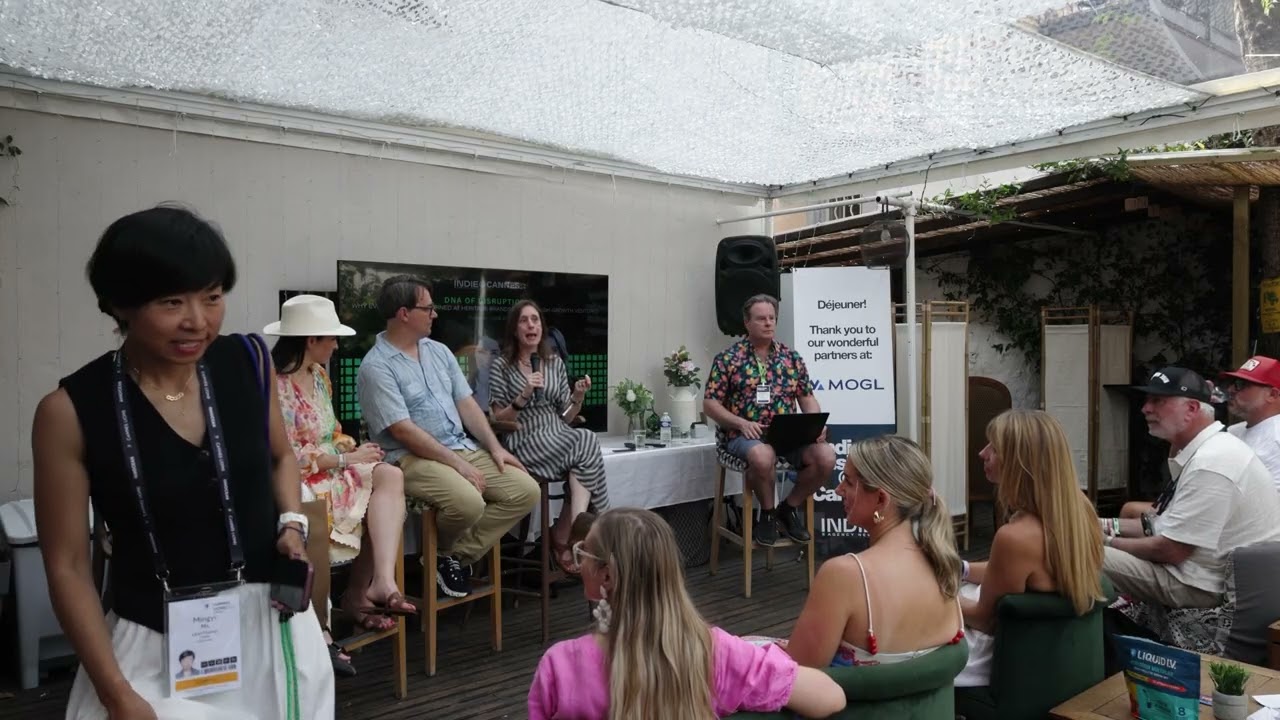 Watch the session
The setup
Most marketing playbooks were written for brands people already know. Reach curves, share of voice, creative wearout, brand purpose. All of it assumes a starting position where the consumer has heard of you and the question is whether you stay top of mind.
Now take that playbook to a company where the unaided awareness number is zero. Not low. Zero. Every instinct in the heritage toolkit points the wrong direction, and the marketer carrying it has weeks rather than quarters to notice.
That is the problem this session was built around, and Katy Marshall answered it in the first 90 seconds by naming the thing she had to throw out.
"The first legacy belief about brand awareness I had to kill was focusing on brand awareness."
She came to Sollis Health from BCG and three years at Kraft Heinz, which is to say from places where the brand equity does a great deal of the work before the marketing starts. What follows is three brand and agency leaders explaining what breaks when that support disappears, and what they build instead.
For any independent agency selling to challenger brands, this is a briefing document on how your best prospects think, what they need from you, and where they suspect you are guessing.
Who was on stage, and why they're worth listening to
Part One — When nobody has heard of you
Katy's opening move needs its context. Sollis Health sells concierge emergency medicine, which means the purchase decision has an unusual shape. The moment of need is unpredictable, and the moment of consideration can arrive years earlier.
"In emergency medicine, there's frequently a latent period where you may have heard about us, but you don't need us yet, and so by just focusing on brand awareness, we wouldn't have been nurturing the full funnel."
Awareness in that category is a receipt, not a result. The buyer who heard about you and did nothing is not a failure of media. That buyer is the entire business model, sitting in a waiting state that can last years, and the job is to keep trust intact across the gap. Her fix was to crystallize who the company is first and build credibility second, rather than spend at the top of a funnel nobody had mapped.
Brand purpose was the second thing she had to put down. She learned that architecture at Kraft Heinz, from mentors who built it at Unilever, and she found its limit standing in front of a product that refused to cooperate.
"You're staring at Velveeta Cheese, waiting for the purpose to reveal itself."
Purpose is a privilege of brands whose function is already understood. A company with no unaided awareness has to explain what it does before anyone will sit still for why it exists, and a purpose exercise commissioned too early buys a platform nobody can attach to a product.
Cathy's version of the problem is the inverse, and she said so on stage.
"We have over 130 hospitals, and most pet parents who live near one still don't know who we are."
At Saks, she had the safety net. People had heard of the brand, held a baseline understanding of it, and might need reminding. VEG has customers sitting squarely inside the target market who have never encountered the name. Her conclusion about tactics is the one worth stealing:
"We're not fighting for top of mindedness. So putting a logo on something just doesn't work for us, whereas it will work for a more heritage brand."
Logo placement is a memory-refresh tactic. It works on stored knowledge. Where there is no stored knowledge, it purchases nothing, and a great many sponsorship decks sold to challenger brands are priced as though it does.
Alison put a number on the same phenomenon from the agency side, and her framing is the most portable idea in the session.
"If you're a brand that comes out of big CPG, it's all about reach. It's all about reach. It's all about reach. If you are a brand with low levels of brand awareness, just exactly what your business problem is, frequency. You're operating at different levels of frequency."
Reach is the correct obsession when the brand is known and the task is to be remembered. Frequency is the correct obsession when the brand is unknown and the task is to be learned. Marketers arriving from CPG carry the reach reflex into a business that needs the opposite, and the media plan looks professional the whole time it is failing.
She extended it to creative:
"There's this balance between like salesmanship and showmanship, and there sometimes what we'll see is brilliant creative ideas that are great at the showmanship of creating emotional impact for a brand. But if you have zero levels of brand awareness, and we have worked with a lot of brands that have zero unaided and maybe four, six, seven percent aided, you better tell me what you do first and what you are before you have, or at the same time, while having permission to create an emotional connection."
Permission is the operative word. Emotional work is not banned at low awareness. It is unearned, and the audience has no frame to hang it on.
Katy took the same logic to its most uncomfortable conclusion for anyone who sells creative for a living.
"What these brands need to do for like a really long time, like longer than you think, is just keep introducing yourself, and you can do that in different ways and test different ways in, but there's probably going to be one message that beats the rest, and you have to just keep repeating that message for years and years and years."
Then she produced the receipt.
"The same ad that I ran at Harry's in 2013 as our best performing ad is still their best performing ad in 2026."
The ad asks whether an eight-pack of razor blades should cost $32. 13 years, one winning message, no rotation. Creative wearout, the standard justification for the annual refresh, is a heritage-brand problem that challenger brands inherit by imitation rather than by need.
Cathy's word for what all of this does to the standard model was blunt.
"I think playing and being in the veterinary emergency space really kind of broke the marketing funnel for me in a way."
The break is specific. She cannot create demand for a pet emergency, and would not want to. The segment of the funnel joining consideration to conversion is out of her hands entirely, which means top-of-funnel spend has to be justified without a clean line down to a sale. Every attribution conversation at VEG starts from that fact.
Part Two — What the agency has to bring
The second half of the session moved to the relationship between challenger brands and their agencies, and the panel was unusually specific about what makes it work.
Alison named the value that governs it at Eden.
"One of our core values, and the other one is intellectual humility."
Her argument for why it matters is structural rather than cultural. Heritage brands can afford a senior leader in every discipline. High-growth brands cannot, so the client-side team will be missing deep expertise somewhere by design, and the agency has to be honest about the gap rather than nodding along.
Katy's version of that from the client seat is the most concrete hiring example in the transcript. Her team at Sollis came mostly from consumer backgrounds, including her.
"I actually brought in an agency, a media buying agency, with specific healthcare expertise because there are real considerations with HIPAA pixel tracking, privacy, that I knew my internal team didn't know, and I didn't really have time to educate them."
That is a purchase order written against a named gap. Not a capabilities review, not a roster consolidation. She could describe the specific compliance exposure her team did not understand and bought the missing knowledge directly. Agencies pitching challenger brands should expect the brief to look like this and should be able to answer it.
Cathy described what she wants from partners in the terms a new-business team should memorize.
"I need you to give me guidance and steer me to the next actionable step, and really looking for partners who can take me from that big, vague, nebulous question to that next action."
Note the shape of the request. She is not buying a deliverable. She is buying the conversion of ambiguity into a next step, which is a service most agencies perform constantly and price at zero.
Then Alison told the story that anchors the session, and it is the best available illustration of what siloed planning costs. A brand spending $300 million in advertising had every channel planned in a separate silo, to the point where the concept of integration did not register.
"It was very hard to speak with them theoretically about what do you mean there's a role for someone stitching together into an integrated way."
Her team broke it into five worked examples of where the money leaked. Two of them are worth the entire session.
The first involves football. Two dominant category rivals had a lock on NFL inventory, so this brand's network television strategy went to NCAA and UFC instead. Meanwhile, the out-of-home agency, working with no visibility into that decision, bought national out-of-home dominating the areas outside NFL stadiums.
"Now you have basically zero unaided brand awareness, and these folks are dominating NFL in video. Do you think that that is a great use of $20 million in q4?"
Two agencies, both competent, both delivering against their own brief, jointly buying a brand's presence into the one environment where its competitors would swallow it whole.
The second example is quieter and more common.
"They were running their CTV through three different distinct DSPs. So what we started to explain to them is across three DSPs, you can't manage your reach and frequency across that."
Three demand-side platforms means three separate frequency counts and no single view of a viewer. For a brand whose central problem is frequency against a small audience, that is the one measurement they cannot afford to lose. The client's response, in Alison's telling:
"Oh, I now get it. You're now in charge of our budget. All the other agencies need to listen to."
Her closing point on that story is the line to build a pitch around:
"A measurement framework, not reporting, not linking clicks to conversions, but a measurement framework is what underpins it all."
Reporting is what the client already has, clicks tied to conversions after the fact. A framework decides in advance what each layer of the plan is accountable for, and that difference is what an agency can charge for.
Chris picked up the framework question and made an argument about sequence that most measurement conversations skip. Where a typical framework starts at awareness and works down to conversion, his begins one layer earlier.
"We got to start with delivery because how we're actually delivering the media is going to dictate everything."
His reasoning is that optimization after the fact cannot recover what a plan never delivered, and the lag between spending and learning is where growth brands lose their year. He described the practical payoff as identifying that the same audience was reachable on YouTube at half the CPM of connected TV, then verifying in execution that the reach arrived.
He was equally direct about the awareness layer, and this passage is the one to read to any client who says they want to build a brand.
"People are, I want to drive awareness. You're like, okay, what is your awareness now? It's like, well, I'm not measuring it. I'm not going to pay an external measurement partner to go do this. It's like, well, then you're not trying to drive that."
Refusing to pay for awareness measurement while asking for awareness is a stated goal with no scoreboard, which in practice means the budget will be judged by conversion metrics anyway. His prescription is a partner running a panel so awareness can be read by channel and by creative rather than as one number at the end of the quarter.
On the bottom of the funnel, he made a point that defuses a fight most agencies have annually.
"It can sometimes turn into this like fight for attribution and this like battle of the models, but it shouldn't. Because ultimately, once you get those top two layers right, you should see the impact on your business."
The attribution war is a symptom. Where delivery and awareness are measured properly, the conversion layer stops carrying the whole burden of proof.
The uncomfortable truth
The sharpest exchange in the session was between two people who agreed on nearly everything else, and it started with a courtesy.
"I think the one thing I'll challenge, not to challenge Katy, but I'm going to challenge Katy a little bit."
Alison's target was the winning-ad idea. Katy's Harry's example, 13 years of one message, represents a specific model of growth marketing: find the ad that beats the others, then run it until the sun goes out. Alison's argument is that the model is dated, and her reason is measurement rather than taste.
"We've actually started encouraging our clients to move away from the idea of a few years ago growth brand interpretation of what does the winning creative mean, and we've redefined the measurement model for how clients can think about creative, in terms of linking it to business impact and showing how improvements in awareness have longer lag impact at the business revenue level."
The consequence she names is the one every agency has lived through:
"Without that, you are always going to get clients reacting to what happened in the first second to the sale."
A single champion ad, judged on immediate conversion, trains the client to evaluate everything on the fastest-moving signal available. Awareness gains show up in revenue late, and a measurement model with no place to record them will read them as failure.
She closed the argument without hedging.
"Until you use measurement as delivered through the media as a vehicle to understand the creative impact, and you make each channel attached to a different set of metrics, you cannot win."
Both positions have evidence. Katy has an ad still outperforming after 13 years. Alison has a redefined measurement model and a $60 million budget handed to her because of it. The disagreement is over whether the winning ad is the goal or a by-product of a system that can see more than the last click, and every agency working with a growth brand will be asked to take a side, usually without being told that is what is happening.
The context for Alison's credibility here is a story she told earlier. Her agency won a large client on upper-funnel work. At the first quarterly review, the founder and CEO of a $200 million brand stood up in the room.
"This is the first time someone's made media make sense. I'm handing you my $60 million media budget."
She flew to New York the following week and told him the truth about what he had just bought.
"I'm so honored you trusted me with your $60 million budget, but there's very little we're going to accomplish with the creative you just let into the market."
She describes the conversation as provocative and difficult. It ended with the client asking for help, and Alison, who spent 20 years in creative agencies before this one, running a creative agency review she was not paid to run. Her account of what separated the winner from the rest:
"The winning agency understood the business metrics against what this client cared about, and the brief delivered against the business metrics that the media was also briefed against, and they did that uniquely at each stage of the funnel."
One brief, one set of business metrics, media and creative briefed against the same numbers, differentiated by funnel stage. That is the whole prescription, and the number of agencies operating that way is small enough that doing it wins reviews.
The other uncomfortable moment belongs to Cathy, and it is the confession the moderator asked for. Her sacred cow was brand protection.
"It was really protecting the brand so closely that you didn't really give it breathing room to be human enough to connect with other humans."
The proof was an influencer program run the way a luxury house runs everything.
"Not only will we tell them all the things that they can't say, we're just gonna script it for them. Just say these words exactly and don't say anything else."
It failed, and her reaction to the failure is the part worth sitting with.
"We have like pretty people wearing beautiful outfits. Like, why would it bomb?"
It bombed because a scripted creator is a media placement wearing a person's face, and the audience can tell. Her revised approach hands the creator the relationship and lets them explain their own connection to the brand in their own words. Her framing of the trade: a little fuzziness around the brand is acceptable, and suffocation is not.
What you can use
Every session from Indies @ Cannes 2026 — plus every other Blueprint, the tools, and the surveys — opens up with one sign-in.