Search, AI overviews, and what agencies can still sell.
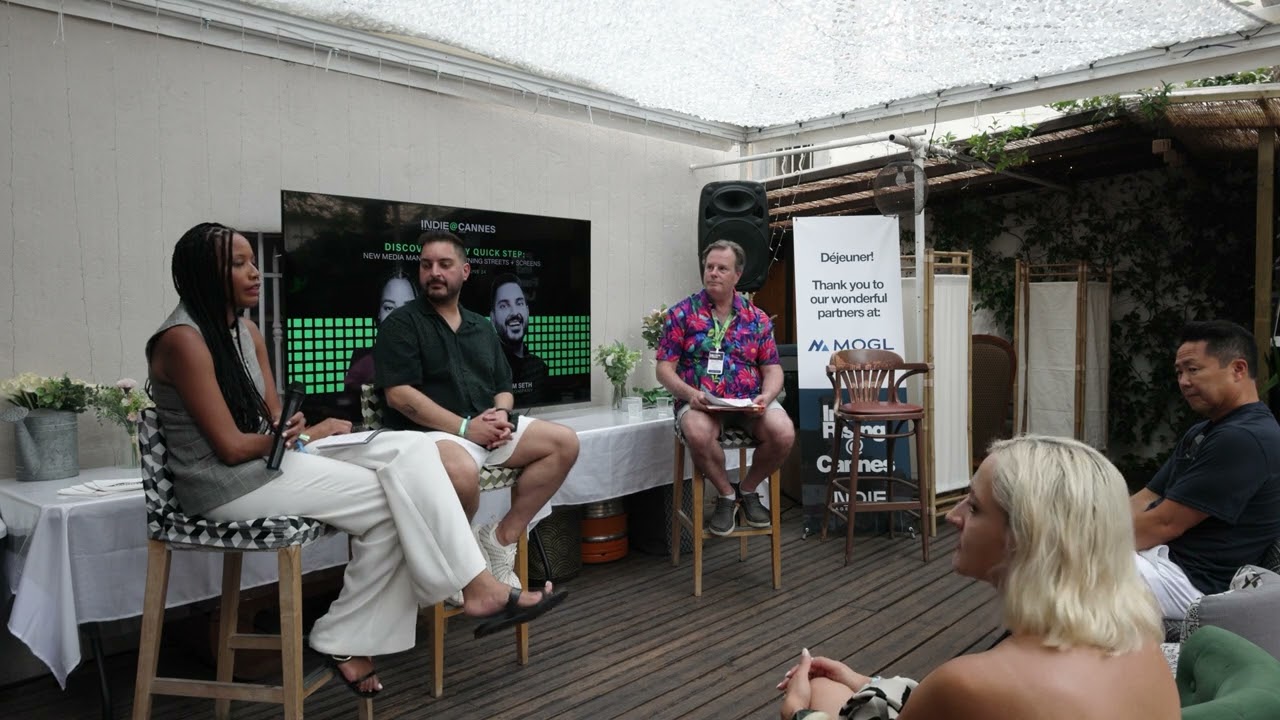 Watch the session
The setup
Every agency principal has now had the meeting. A client asks what AI overviews mean for their traffic, or whether they should be optimizing for chatbots, or whether the 10 blue links are going away. And the honest answer, most of the time, is a version of "we're watching it closely," which is another way of saying nobody in the room knows.
That vacuum is expensive. It is expensive because clients fill it themselves, usually by buying a tool. It is expensive because a shop that cannot answer the discoverability question loses the strategic seat to whoever can. And it is expensive because the underlying advice has not changed much in 15 years, which makes it sound like a dodge even when it is correct.
This session put a Google executive and a technical founder on the same two chairs and one microphone and asked them to say what changes and what does not. What came out was less dramatic than the trade-press version and more useful. The platform side argued that control moved rather than disappeared. The founder side argued that the same shift hands independent agencies a business they are not building.
Who was on stage, and why they're worth listening to
Part One — What changed, and what didn't
Kyle's opening question was built to provoke a big claim: a consumer photographs a stranger's jacket on the street and buys it inside a minute, so how has intent fundamentally changed?
Jessica declined the premise. Her answer separated the behavior from the technology, and that separation is the most portable idea in the session.
"Someone goes outside, they see something, they're interested in it. At some point, they purchase it. You can more or less call that window shopping, but with a purchase at the end. That is as old as Windows itself. People have always intended to buy things that they see outside, but what's changed now is that technology has started to catch up with the consumer behavior and consumer intent that was always there."
The reason this matters commercially: if intent is unchanged and only the plumbing moved, then the client who wants a new strategy for every product announcement is solving the wrong problem, and the agency that sells them one is complicit.
What has moved, in her account, is measurable. Query volume is up. Query depth is up sharply, with average query length running at what she put at seven times the previous average. And the job people bring to a search box has widened from deciding to discovering.
"In many ways, we say that AI is one of the best things that ever happened to Google Search."
She followed it with the caveat that carries the session: "But in order to take advantage of that, it's not a straight line. You do need partners to help you navigate the change to make sure that you have robust data, which we've been talking about for years."
Then the line that reframes how much time anyone has to get ready.
"AI right now is as slow as it will ever be again."
Vikram took the same shift and made it an argument for small shops. His point is technical and consequential. Ranking and delivery have been moving from pattern recognition toward natural language understanding, and that changes who can win attention.
"In the past it was so done, called even like several years ago from a machine learning point of view, prioritizing the pattern recognition of like clicks, views, how long you hovered on something for, everything else. It's actually switching far more to now it's natural language understanding. And from a natural language understanding, you get to actually blow up a lot quicker. Like there's a reason why smaller creators are actually getting way more attention than bigger creators than before."
His conclusion for the room: "You can actually speak to the niche a lot quicker and a lot better because the way the algorithm is working is a very different perspective." If that holds, the specialist shop's narrow audience knowledge becomes a distribution advantage rather than a ceiling on billings.
Part Two — Where control went
Kyle asked the question most principals are being asked by their own clients: how do you coach a brand leader who is terrified of losing control over how and where they get discovered?
Jessica started with the people rather than the platform, which is a choice worth copying.
"Like any good coach, I would start with some empathy. Marketers, agencies, brands have been through a lot. They're navigating a tremendous amount of change. Let alone technology. We're also talking about consumer behavior has changed. So much has happened in almost a blink of an eye."
Then she withdrew the comfort she had extended, on purpose.
"After that, though, I would very carefully and lovingly also say that this is just the beginning. So the consumer funnel, I don't see it reappearing in the same way that it did before."
Her answer on control is the practical core of Part Two. Control did not evaporate. It relocated, and it relocated into things agencies can bill for.
"Maybe the control wasn't where it was, where you're used to it being, where it's been the last 20 years, but there's still a lot of control in a lot of very important places."
The places she named: the quality and structure of the client's own website data, the robustness of the signals they collect, and what she calls brand coherence, meaning "a very strong, authoritative, unique bank of content."
She grounded it in a product example. Google has announced dynamic ad capability within Search, described in the session as AI Brief, where the bidding and the manual ad changes are handled by the system. The trade is that the brand has to supply the direction it used to express through keyword bids.
"To basically take advantage of that, you need to tell us what is your messaging, what's your brand voice, what's your ideal consumer, what are the consumers that you don't want to target. And essentially there's a lot of control within that, even though you're not the one going in optimizing manually."
Read that as a scope of work. Messaging, voice, ideal customer definition, and a written negative-audience definition are strategy deliverables, and they are now inputs to a bidding system. The agency that shows up with those documents written is running the account. The agency that shows up asking about match types is not.
Vikram's version of the control answer is blunter and cheaper to implement: stop collecting tools and settle on a single source of truth, one system of record where media and measurement both live. On stage he named the setup he recommends, CM360 for media trafficking with Google Analytics connected to it, and made the case for it by describing the alternative.
"There's a bunch of new AI tools, there's a bunch of new tools that people are using in different ways, and then all the new happens, and we forget of just a single source of truth and making our lives easy again, and then we have like 80 sources that we have to go pull information from, and it makes it worse."
Asked what he says to organizations that refuse to build a centralized data model, he gave the shortest answer of the hour.
"That's a terrible idea. They're doing it wrong, and they're just hurting themselves."
Jessica, laughing, noted her employer's position obliged her to be gentler. Vikram offered to keep the role: "I'll be the angry interpreter."
Her longer version is the better one to use in a client meeting, because it reframes the spend as a competitive question rather than a hygiene question.
"Could you run a marathon in flip-flops? Some people have. It's possible to. Would it cause a lot of friction? Probably a lot of pain. Would you also be at a tremendous disadvantage to everyone else running a marathon? Also, yeah."
And then the argument that gets a CFO to fund it:
"The more that CFOs realize that they can use marketing as a growth center, as a profit center, that is what they'll end up demanding in the long term. So actually, having a data-centric model becomes less optional, and it also will become a board mandate."
On the replacement anxiety, Jessica retired the standard metaphor. "I think we need to update our analogies from black box. I've been in the industry fifteen, seventeen years, and we've been talking about the black box for a while."
"Let's say AI is the engine. You still need a driver. Someone who sets the direction, who sets the guidelines. In addition to that, to make any great car go fast, you need good fuel, and I see data, the technology, your insights, your things that you know about your consumer, that is the fuel. And then the last thing I would say to put it simply is that you can put me in a McLaren. That doesn't make me Lando Norris."
The payoff line she wanted the room to keep was about measurement, and it lands as a repositioning of the whole analytics function.
"Historically we look at measurement as a report card. The number one thing I would want you to take away from what I've said today is that you should see measurement as fuel."
Her diagnosis of what most media audits still get wrong is a single sentence that names the failure mode.
"They're scrolling, streaming, shopping, searching. Sometimes all within the same sitting."
Followed by the standard: "Consumers expect you to move at the speed of their curiosity."
There is one more place control can sit, and it is the one nobody in the room was expecting. The most actionable argument in the session was not about search at all. It came near the end, when Vikram was asked about the unglamorous work, and again when an audience member asked him to expand on it.
His observation is a gap. Independent agencies specialize. Specialization means they know, in detail, who a category's buyers are and where they can be reached. That knowledge currently leaves the building inside a deck.
"I'm actually surprised how many agencies haven't started building out their own audience companies. Like, you see data in a different way. You build strategy in a different way. You think about how to get audiences in certain ways. You could totally build out something, and there's a lot of data placed for that one to build out your own audience."
Pressed for the mechanics, he described something closer to a product line than a service.
"There are some agencies who specialize specifically in certain retail industries. They have an understanding of where people go, how they think, and what they do. You can start doing a bit of a curation business, putting together what you'd see as curated blocks and how you then would sell that back to your clients. There's enough signal to build on third-party audiences to start packaging that up and selling that back out."
The revenue logic is the part to sit with: "There's so much of your own strategy that you put in that you know you're going to use for multiple clients in multiple different ways, and creating a bit of a passive economy on that one."
Mechanically, the packaged audience gets pushed into a buying platform, DV360 among them, where it can be bought against. Vikram disclosed his own interest here without being asked, naming Brain Barrel as one of his companies operating in that space, and separately noting that another of his companies works as a data onboarder for retailers. "I'll say that openly. The bias on that one."
His closing observation is the one to test against your own client list.
"Especially on the indie agency side, there are agencies are so specialized and they have such a clear concept of how to find those end users for certain brands and brands they've never worked with, even. You could start building out that audience and build audience business, and you might be surprised that brand might start buying against it."
That last clause is the whole idea. A brand that will not hire you might still buy your audience, which turns a lost pitch into a customer.
He paired it with a warning about how agencies are currently selling their AI work, and it is the sharpest critique of agency marketing in the session.
"So many agencies are building agents right now, but they just say their agent is unbelievable. We were amazing at building agents. We're great at it. Letting go of the whole story in front of that, the whole narrative of what is the orchestration layer you put in, how does it organize that data, how does it pull it from different areas, and how does it create your agent to be stronger. That matters more, because there's also a lot of people who are just using off-the-shelf agents, white-labeling it, and putting it out there."
The differentiator is not the agent. It is the orchestration, and almost nobody is describing theirs.
The uncomfortable truth
The hardest question of the session came from the floor, from Brian of Bray and Co, an Australian running a creative agency out of New York who established his own credentials first: his shop shipped an AI product in 2023 and the trade press declined to believe the press release.
His question was about money, and he built it as a Thanksgiving metaphor.
"AI is kind of a turkey, in a good way. It's delicious. It fills you up. You want more of it. But what's really important is the stuffing, and what people are kind of ignoring is the stuffing of AI, which is the cost of AI."
His specific concern: token prices are climbing, the industry is in the largest infrastructure build in history, and estimates he cited put token cost within two years at 15 to 20 times current levels. Clients are modeling transformation on today's prices. He wanted to know how an agency advocates for that transformation while holding that number.
Jessica's answer began by naming the wall she could not go past.
"I can't speculate, because I would be fired."
She is a platform employee being asked to forecast platform pricing on the record, and she declined. That restraint is the honest part of the session, and it should be read as information rather than evasion. If the person closest to the machine will not price it, no agency should be putting a two-year cost curve in a client deck either.
What she offered instead was two disciplines. The first was governance, and her description of the current state is recognizable in every organization.
"You have some companies putting proprietary data into multiple different tools with no actual governance about where that data goes. You also have some teams using it just to quickly answer emails that are two lines."
The second was unit economics: know profitability down to the SKU, so the cost question can be answered as a return question rather than a budget question. "Is it worth it? The cost that we have, are we actually getting a return for the investment that we're making?"
Vikram's answer went the other way, and it is the part a reader should push on.
"I agree with you. That's going to go up. I just think that's a might be ridiculous to say, but it just feels like it's a future problem, not today."
His reasoning is that competition will cap it, and he pointed at China, where he says work is being done "for like pennies on the dollar" using small language models. "There's so much proof to show that you do not need billions of parameters for all the things you need to do." His frame for what happens next was borrowed and blunt: "It's still Jeff Bezos' way. Like I can take your margin and I will win off that."
Two experts, one question about the cost of the thing everyone is buying, and no number between them. That is the state of play, and any agency claiming more certainty than that in a pitch is guessing.
There is a second uncomfortable item, and it is structural rather than dramatic. Both people answering the discoverability question have a commercial stake in the answer. One works for Google. The other is a Google partner who sells audiences and onboards retailer data. Both disclosed it, Vikram explicitly. The advice still holds up, because a single source of truth and a well-structured product feed were good ideas before either of them had a product to sell. But the reader running an independent shop should notice that the recommended fix routes through one company's stack, and should price the dependency.
What you can use
Every session from Indies @ Cannes 2026 — plus every other Blueprint, the tools, and the surveys — opens up with one sign-in.