The game of telephone between insight and activation.
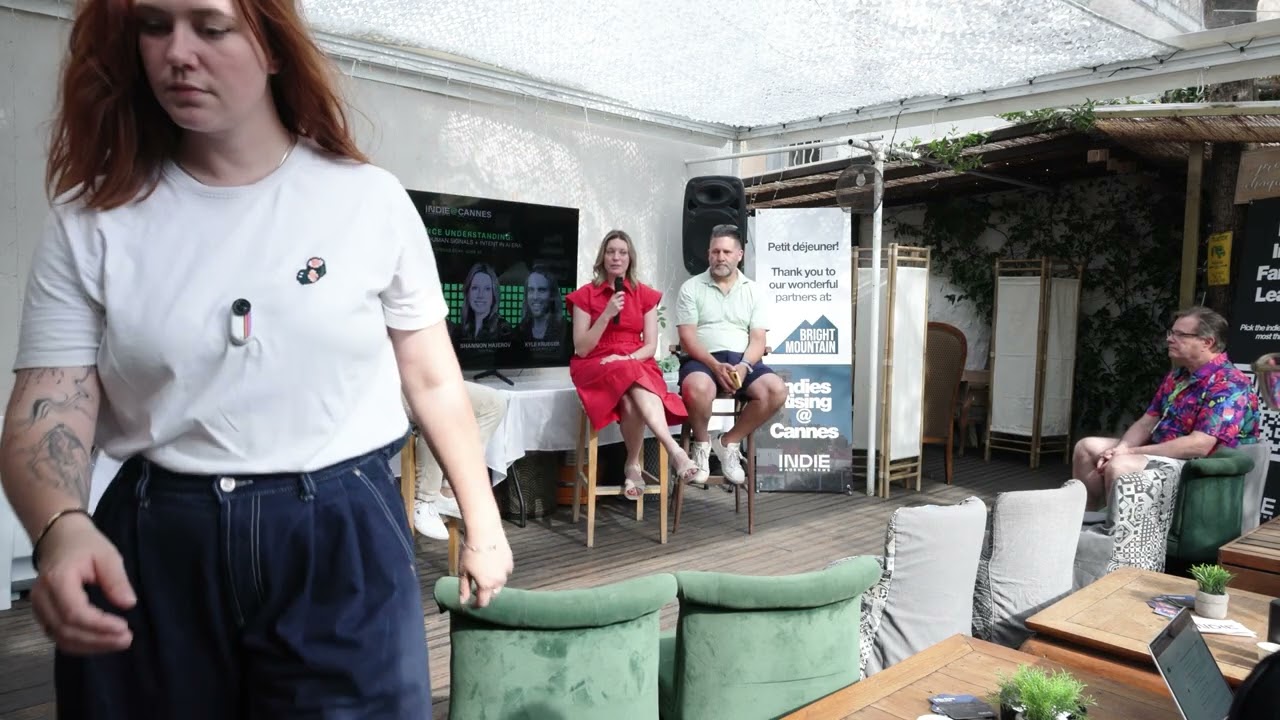 Watch the session
The setup
Somewhere in your agency there is a segmentation study. A client paid for it. It has five or six segments with names, need states, media habits and attitudinal splits, and it took months to build. It informed a brief. The brief informed a plan. The plan went out to platform partners as a line item that reads adults 25 to 54, or frequent travelers.
That last sentence is the problem this session was convened to name.
Andy Davidson set the terms in his opening minute, and he did it by stating the contradiction rather than the ambition.
"Every business, every brand, every partner of every brand needs to understand its audience. Understanding of audience drives strategy, it drives product, it drives marketing, it drives sales, and it helps to inform and create alignment between all of those functions and the audience's needs and expectations as it relates to whatever product or service is in question. But the reality is that a lot of brands go to market without those insights. Campaigns launch without proper insight, products launch without proper insight, and we're going to focus today on trying to understand why and a little bit about how to fix that."
Nobody on the panel disputed that framing, which is itself informative. A brand-side insights leader, an independent agency's media analytics head and a publisher's advertising lead all agreed that the insight rarely survives the trip. They spent the next 50 minutes on where it dies.
For an independent shop, this is not an abstraction about the industry. It is the mechanism by which your best strategic thinking becomes indistinguishable from anyone else's media buy, and then gets judged on performance numbers that were never a fair test of it.
Who was on stage, and why they're worth listening to
Part One — Where the insight dies
Kyle's answer to a routine moderator question turned into the spine of the session. Andy asked what challenges he sees implementing client insights from the agency seat. Kyle started by sorting brands into three types, and the sorting is useful on its own.
Some brands know nothing about their audience and want the agency to invent one. He does not treat that as an opportunity.
"They'll often ask us to define their audience for them, which is a red flag because we almost know nothing about them as a business, what they stand for, etc."
Some arrive with an anecdotal audience: a team conviction, or qualitative work with no quantitative backing. And the third group, most common at enterprise level, arrives with a real customer and marketplace segmentation, surveyed and organized and expensive.
That third group is where the damage happens, because there is something worth damaging. Kyle walked the chain step by step, and each step is one most agency people have performed without registering it as a loss.
Step one is the handoff from brand to agency, or agencies. Creative, PR, paid media, organic social, CRM. Each does something slightly different with the same document.
Step two is the rebuild. Kyle's own first move, for most of his career, was to reconstruct the client's segment inside a syndicated planning tool.
"All I'm doing is recreating a very robust definition of an audience with a very simple proxy of that audience in that system, and the brand sometimes doesn't know any better. They're not quickly asking the questions of how I built or made choices in that platform to keep the data stable."
Step three is approval. The client sees the plan built off the proxy, likes the ideas and tactics, and signs.
Step four is activation, where the proxy gets translated a third time into whatever each partner's system accepts. Kyle's example is going into Meta and building an interest-based target off a proxy target off the original segmentation.
Then the conclusion, which he delivered without hedging:
"So this is a game of telephone where the loss of signal happens at every single step."
And the part that should stop a room:
"It's possible we never even spoke to the original audience with the ads. We think we did, we feel like we did. Status quo of the industry has been you did, but maybe we didn't, right? And we don't really know, and everyone just keeps going on this cycle year after year after year. So those original insights, which are so powerful, so important to the brand, never make their way and actually speak to the audience the way the brand may be intended in the first place."
The consequence is not only wasted media. It is that campaign performance, agency reviews and next year's plan all get decided on the strength of a test that was never run. You are being graded on reaching an audience you may not have reached.
Pavi picked it up and gave it a textbook frame, which makes it easier to say out loud to a client.
"It's marketing 101, right? Segmentation, targeting, positioning. So the brand groups are thinking about segmentation, and it's always also tail wagging the dog. What data do you have to do segmentation? So then you segment based on that. It's more aggregate, it's more generic, it's less depth and less sophistication. But then the targeting, the media team now starts saying, listen, let me create proxies. I can get this information better. And then they start making their assumptions on how that targeting works. And then the positioning, you go to the creative teams or you go to the platforms and you say, where do you find them and how will you communicate with them? So I think in each of that marketing 101 the translation losses are just too much, and they just multiply."
Multiply, not accumulate. Three modest degradations in sequence do not produce a modest degradation.
Shannon confirmed the far end of the chain from the seat that receives it. PayPal sees checkout activity across roughly 30 million merchants, with authenticated users rather than probabilistic ones. What arrives in the brief does not reflect that.
"Being on the publisher side, what I see is when we receive a brief or we receive an RFP, it is so basic. You know, we can do some really sophisticated stuff. We can find exactly who you're looking for, and even the most sophisticated largest advertisers, it typically boils down to a demographic, or a very simple audience segment. You know, frequent travelers or luxury shoppers, things like this."
That is the loop closing. The brand commissions depth, the agency compresses it to fit a planning tool, and the platform that could act on depth receives a demographic. Kyle's diagnosis of why is unsentimental: agencies either do not trust their ad tech partners to handle robust information, or they were never given need states in the first place and have nothing but demographics to pass along.
Pavi's own version of the failure starts earlier still, inside the client organization, and it is a habit rather than a technology gap.
"Even we, when I was on the client side, are training our stakeholders to look at data very siloed. It's like, no, you can't ask that question. This question is for brand tracking. We are doing a market share session. It's like no, the business needs to understand how do these interconnect."
The audience poll ran in this stretch and landed in the same place. Asked for the single biggest barrier to building genuine audience intelligence, the room's top answer was that the insight exists but does not reach decision makers. Second, tied: lacking the skills or tools to turn data into action, and speed, meaning the insight arrives after the decision.
One attendee, Katie Walley-Wiegert, named the mechanism behind the winning answer, and it is not a tooling problem:
"Insights exist, but they don't reach the decision makers. I think it's interesting the gatekeeping that's happened, especially within agency and brand organizations I've worked within, where we're just making assumptions of what the folks that we report into need to know and need to see."
Pavi's response accepted the charge on behalf of everyone who has ever curated a readout: "Maybe there is a culture issue of making this more democratized, or maybe there is an assumption we are making that you don't need to know this, so let me only give you what you need to know. And through that process, we've missed an opportunity because I was trying to second guess what you need to know."
Part Two — What AI is being asked to fix, and what it is being used for instead
Andy moved the panel to AI with a light touch about the venue and the year, and the answers split cleanly by seat. All three are worth reading, because they describe three different jobs.
Shannon's use is discovery. PayPal Ads had never used the company's transaction data in a marketing capacity, and the analysts who knew that data best had been pointed at risk and payments. So the team started asking open questions of it.
"For the first time, we're trying to figure out like who are these people? What are they doing online? How do we reach them? How do we segment them? And so we have been deploying a bunch of AI models and asking a bunch of just kind of curiosity-based questions to try to understand them more."
The result she shared is the best worked example in the session. On Venmo, one segment receives far more inbound payments than average, spends 25% more than average when paying with Venmo, and has four times the friend connections of the average user.
"So we're calling them the chief friend officer. You throw the party and you order the pizza and you order the beer and everybody pays you back, or you book the vacation and you pay the Airbnb and you book the boat rental, and everybody shows up without doing any planning, and they pay you back."
That is a behavioral segment built from transaction structure rather than declared attributes, and it does not appear on any demographic form. It is also, by Shannon's own admission, unresolved: the team has discussed giving those users a badge inside Venmo, and has not decided what else to do with it. Which is the honest state of most good insights, and worth remembering the next time a client demands an activation plan in the same meeting as a finding.
Kyle's use is interrogation. Deep Focus is turning client segments into agentic personas, or digital twins, so a segment can be queried after the research has closed.
"During a research study, you're asking a 20 minute survey, whatever happens to be, you're asking limited questions, and you can't possibly contemplate every question you have in your mind or react to real time inquiries or things that are happening in the marketplace. So when we now go back with an agentic persona and query our original audience with something that's happening now, not something that was happening when the segmentation is being built... on demand focus groups can be developed."
Doug Zanger pushed back from the floor with the word most people are thinking: the whole synthetic focus group category feels a little hinky. Kyle took the objection rather than deflecting it, and answered with a validation protocol, which is the part to steal.
Run traditional focus groups alongside the twins and compare. Ask the persona questions with known answers from existing quantitative work, and test against those known responses. Treat the mapping from research data into the agentic platform as a serious exercise with the research partner, not a file upload. His caveat on the human control group is the sort of thing that only gets said by someone who has run both: "We know real people lie all the time or say stuff that makes no sense."
His strongest case for the technique is a client with an over-tourism problem, where the honest answer is unavailable by design.
"You go to a focus group, or you do quantitative research. No one's going to admit they're a bad tourist, right? No one's going to say I do disrespectful things when I travel. That'll never happen. But the client still has to understand how to counteract that, or find the right signal to suggest that person might actually be more responsible based on other correlative actions."
Kyle's framing of where the value sits is the line independents should sit with: the opening is upstream, in audience definition and redefinition, not downstream in activation. That is the part of the chain an independent agency still controls.
Pavi's contribution is a warning and a filter. He has watched the adoption cycle from inside a CMO's organization, and he named its shape.
"I call it the 3F cycle: the fear of AI, the fascination, and then equally quick or quicker is the fatigue."
Then he described how the fear gets sold, from the receiving end.
"A lot of people selling AI leverage that insight very powerfully to go and talk to the C-suite to say, do you want to be the chief marketing officer on whose watch you got left behind because you were not using AI... And guess what happened that time? I was on the client side, and I would have my CMO rushing in and saying, what are we doing with AI? And why are we not doing this?"
The cost of that, in his account, is not the failed program. It is the year.
"Before we know, we got sucked into doing something where we think it's a problem, but we started with a solution. And now we are trying to find a problem for the solution... In the six months or the 12 months that it took you to deploy that AI program that you felt you were getting left behind with, which then you stumbled and blundered through your way to fit to your needs... you could have used that entire time and effort and energy of the organization behind what actually was the lowest hanging fruit, where AI actually could have played a role."
His fix is a two-by-two, and it is the most portable tool anyone offered. One axis runs from known to unknown. The other runs from intuitive to counterintuitive. The bottom-left box, known and intuitive, holds what he calls validatory insights: the things everybody already believes, evidenced anyway because someone has to sell the idea internally. Agency to client, regional team to global team, marketing to R&D. That box consumes an enormous share of insights capacity, and it is the box AI should be pointed at first, so that human effort moves toward the unknown and the counterintuitive, where transformational value sits.
He was candid about the odds up there.
"I've been working for 30 years. I can tell you, in the 30 years, there's only probably five transformational insights I've come across, and it's depressing. Like it takes you six years to do one."
Which is why his prescription is arithmetic rather than aspiration: cut the validatory work, do more incremental work, and improve your chances of hitting a transformational one. Instructing a team to only pursue transformational insight is a way of guaranteeing none.
He closed on the distinction that separates most AI programs from useful ones. Efficiency means doing what you already do faster and cheaper. Effectiveness means doing something that was not possible before. His name for the compounding version, and for the company he is building, is the Infinity Growth Loop: "insights will help AI become better, even as AI is already helping insights become better."
The uncomfortable truth
The sharpest exchange of the session was between the agency seat and the publisher seat, and it was about a user interface control.
Kyle raised lookalike targeting and then described how the phrase lost its meaning, using the early Meta implementation as the example.
"Lookalike targeting to them was like you could have a slider on it. I want more scale. I'll just turn it down from 100% to 90 to 85. And as a media buyer, like, gotta deliver this buy. I gotta spend my client's money."
Then the part that names the incentive rather than the tool:
"It has now changed the definition of lookalike from something that sounds good to now, when I hear that, it means my vendor just wants to fulfill the buy, get the scale they need, make sure to get all my client's money, and the audience is kind of like that's there, but we don't worry about it. So in that case, the incentive of the ad tech partner is all about delivering the buy, as opposed to working with their partner to deliver results."
That is an accusation, delivered directly to a publisher on the same stage. Shannon did not deflect it, and her answer is the reason this section exists.
"I think it's something we struggle with too. We've been actually really conservative on lookalike targeting, but then if you don't deliver the buy, to your point, that means you got to go find more audience or admit that hey, maybe we're not the best partner, and you need to go find your audience elsewhere, which is hard, right? Because you're trying to, you know, we're trying to build a business here."
She went further, and conceded the industry has no standard at all.
"We don't have a slider. I don't ever do a slider, but I do think this is an area that probably needs some standardized definition around. Like, how far do you go? How far is somebody willing to go? At what point does it just become so diluted that it's meaningless and it doesn't look anything like the original audience? So I don't think there's like a right answer yet."
And then the line that should change how you write your next insertion order:
"There are other platforms too that will just apply it automatically, and you don't even know. It's just sort of baked in."
Put the three statements together and the uncomfortable truth assembles itself. The audience definition your client paid for gets widened by an amount nobody has defined, on platforms that in some cases do not disclose that it happened, under a commercial pressure that every party understands and none can unilaterally resist. Andy named it plainly: a tension between accurate audience representation and filling the buy.
The discomfort is not that anyone in this chain is behaving badly. Everyone is behaving rationally. The publisher has revenue targets. The buyer has budget to place. The client wants delivery. The uncomfortable part is that the entire system has agreed to stop asking whether the ads reached the audience, because the answer would inconvenience all three parties at once, and because there is currently no agreed definition of what a correct answer would look like.
Kyle's hope-and-fear for AI is where this lands, and the fear is more persuasive than the hope. The hope is that the most powerful tool the industry has ever had gets aimed at the handoffs first, which "seems unacceptable in 2026 that we don't attack those things first." The fear:
"That we won't do that. In fact, we use all that data to create additional confusion and really just keep the incentive insular to the individual activation partner who owns a lot of this data, and in fact make that data gap even wider."
He is candid that indies are buying in the dark right now. On how partners are using AI: "Very non-transparent, right? So we're making choices off of relationships, basic information about how they're using models to deploy X Y Z and hopefully some case study that is six months old that suggests that they can do the same for my partner. That's scary."
What you can use
Every session from Indies @ Cannes 2026 — plus every other Blueprint, the tools, and the surveys — opens up with one sign-in.